.gif)
Why Cloud Access Audits Fail to Capture Real Token Risk
%201.png)
Christian Simko
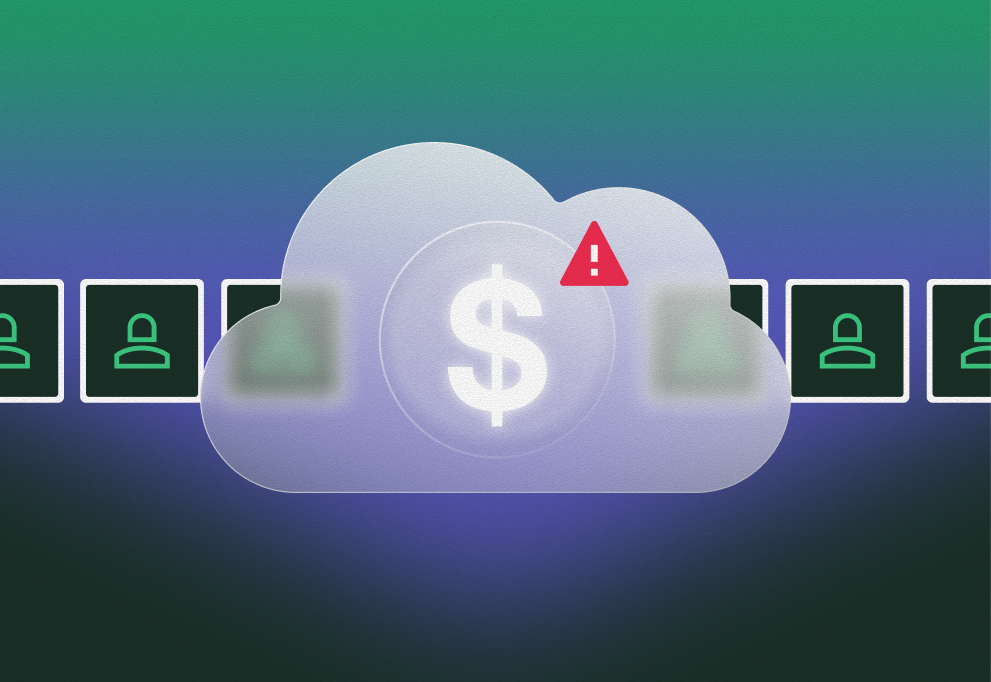
Cloud access audits are a familiar ritual. Teams review IAM roles, check permissions, verify compliance, and produce reports that confirm access aligns with policy. On paper, everything looks controlled.
In practice, some of the most dangerous access in cloud environments never appears in these audits at all.
That’s because modern cloud risk has quietly shifted away from users and toward tokens.
API keys, service account credentials, OAuth tokens, and automation secrets now outnumber human identities by orders of magnitude. These non-human credentials power CI/CD pipelines, cloud services, AI agents, and integrations—and they operate continuously, silently, and often indefinitely.
Traditional cloud access audits were never designed to govern this reality.
The Core Assumption Behind Cloud Access Audits
Most cloud access audits were designed for a simpler access model that relies on assumptions about human users. Those assumptions no longer hold in modern cloud environments:
In the old model:
- Access is tied to a human identity
- Permissions are granted deliberately and reviewed on a schedule
- Risk can be evaluated by inspecting configuration state
- Excess access is rare, visible, and correctable
But tokens break every one of these assumptions. They don’t log in or request access. Their behavior isn’t predictable or bounded by roles. And once issued, they often operate continuously without human supervision.
That shift is why access can appear compliant while real risk accumulates quietly in the background.
Tokens Don’t Behave Like Users—and Audits Miss That
Cloud access audits focus on who has access. Tokens shift the question to what has access, and how it’s being used.
This gap explains why cloud access audits frequently report low risk while incidents continue to originate from non-human credentials. Audits validate policy alignment, but token risk lives in longevity, behavior, and autonomy; dimensions that static reviews were never built to assess.
A typical audit might confirm:
- A service account exists
- Its permissions match a predefined role
- The role aligns with policy
What it rarely captures:
- Whether the token is still in use
- Whether it’s being used as intended
- Whether access paths have expanded through automation
- Whether the token is invoked by systems or agents never accounted for in design
From an audit perspective, a token can appear compliant while actively introducing risk.
Human-Centric IAM vs. Token-Based Access Risk
Over-Permissioned Tokens Are the Norm, Not the Exception
Cloud environments reward speed. To avoid breaking pipelines or services, teams routinely assign broad, reusable roles instead of narrowly scoped permissions.
Token issuance is fast, self-service, and rarely governed:
- Tokens are created for “temporary” needs
- Expiration is often optional or ignored
- Ownership is ambiguous or forgotten
- Reuse becomes the default
Over time, excess permissions accumulate quietly. Unlike human access, there’s no behavioral friction to trigger review. Audits capture the existence of these tokens, but not the risk they represent.
Static Reviews Can’t See Runtime Risk
Most access audits are snapshots. They evaluate the configuration at a moment in time. However, token risk is dynamic. A token that was reasonable at creation may become dangerous months later, as:
- New APIs are added
- New data sources are connected
- Automation chains expand
- AI agents gain autonomy
Access paths emerge that were never explicitly designed, and audits don’t detect them because nothing “changed” in configuration. The risk lives at runtime, not in policy definitions.
Tokens Break Accountability Models
When something goes wrong in a cloud environment, audit logs may show what happened—but not who was responsible.
With token-based access:
- Actions are detached from human accountability
- Ownership is unclear or outdated
- Intent is impossible to infer
Security teams are left asking:
- Who approved this access?
- Who owns this credential?
- Was this action expected?
Traditional audits can’t answer these questions because they were never designed to attribute autonomous activity.
AI and Automation Multiply the Problem
Organizations must understand that while AI agents and automated workflows boost productivity and efficiency, they also dramatically amplify token risk.
These systems:
- Act continuously
- Adapt behavior without human approval
- Invoke other tools and services dynamically
- Chain credentials across systems
A single token may now enable dozens of downstream actions. Audits that focus on individual permissions miss the emergent risk created by autonomous behavior. This is why prompt logs, policy checks, and configuration reviews all fall short. The danger isn’t just what a token can access, it’s how that access evolves over time.
Why Compliance ≠ Control
Cloud access audits are effective at demonstrating compliance, but compliance alone does not equal control. That distinction becomes especially clear in environments where access is driven by long-lived, non-human tokens rather than interactive users.
Compliance vs. Control in Cloud Access Governance
Token risk lives in the gap between these two approaches. Audits may confirm that access complies with policy, while tokens continue operating quietly beyond governance intent, persisting without real-time oversight or accountability.
Governing Access Behavior Is the Only Way Forward
Cloud access audits aren’t failing because teams are careless or controls are missing. They’re failing because the nature of access has changed.
Tokens now drive the majority of activity in cloud environments, but audits remain anchored to a human-centric view of risk. Until organizations evolve beyond static reviews and configuration-based governance, the most dangerous access in their environments will remain invisible.
Real security requires governing how access behaves, not just how it’s configured.