.gif)
Designing an Identity-First Security Architecture for AI-Native Enterprises
%201.png)
Christian Simko
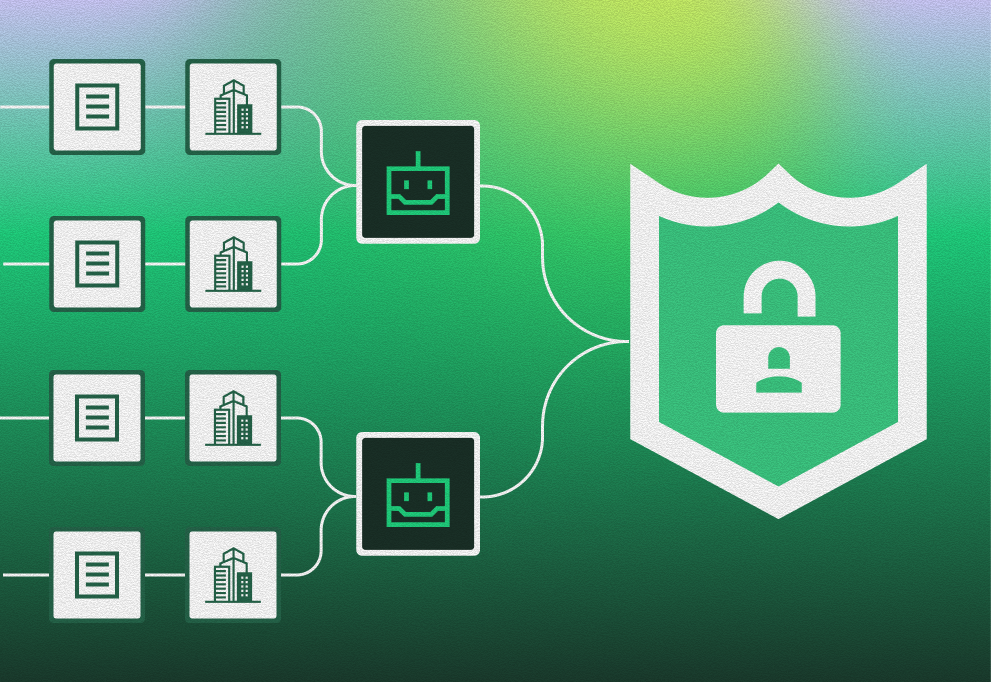
AI-native enterprises differ fundamentally from traditional IT environments. Instead of being driven primarily by human users, modern systems rely on AI agents, automated workflows, APIs, and event-driven services that act autonomously across cloud and SaaS ecosystems.
This shift breaks assumptions embedded in legacy security models. Tools like firewalls, network segmentation, and traditional IAM were designed for environments where humans initiate access, permissions change infrequently, and activity remains predictable.
But AI-native environments upend that model. identity, not network location or application boundaries, becomes the most reliable security control plane. Designing security around identity first is no longer optional; it is foundational.
What Does “AI-Native Enterprise” Really Mean?
An AI-native enterprise is not simply an organization that has started implementing AI tools. It is one where AI systems are embedded directly into core business workflows and operate continuously.
Common characteristics of an AI-native environment include:
- AI agents invoking APIs and SaaS services autonomously
- Event-driven automation triggered without human interaction
- Non-human identities that outnumber human users
- Continuous access decisions made at machine speed
- Tokens, service accounts, and OAuth grants used at scale
In these environments, access is no longer episodic; it is persistent, and it requires a new approach to security.
Why Traditional Security Architectures Fall Short
Many access controls still reflect compliance-era assumptions: static permissions, scheduled reviews, and human accountability.
AI-driven systems operate outside those boundaries. When software initiates access and acts continuously, periodic reviews and activity logs are no longer sufficient to explain or control what’s happening.
Legacy Assumptions vs. AI Reality
Identity as the New Security Perimeter
When AI systems act autonomously, security gaps appear. But not because of misconfiguration alone. Governance models designed for traditional network security lag behind system behavior. In AI-native enterprises, identity replaces the network as the primary security boundary.
Identity answers three critical questions:
- Who or what is acting?
- What is it allowed to access right now?
- Why is this access occurring?
Unlike network controls, identity persists across environments, clouds, and services. It is the only control plane capable of enforcing consistent policy in systems that constantly change.
Core Principles of an Identity-First Security Architecture
Designing an identity-first security architecture isn’t about layering new controls onto existing IAM frameworks; it’s about rethinking how access works at its foundation.
1. Treat Non-Human Identities and Human Users the Same
AI agents, service accounts, and automation workflows must be governed with the same rigor as human users. Without this shift, identity programs remain anchored to a world that no longer exists.
This includes:
- Explicit ownership and accountability
- Defined lifecycle management
- Scope-limited permissions
- Continuous monitoring
If non-human identities are invisible, risk also becomes invisible.
2. Shift from Static Permissions to Runtime Access Evaluation
Static role assignments fail in dynamic environments. But identity-first architectures think differently. They emphasize:
- Context-aware access decisions
- Time-bound permissions
- Behavioral signals (what the identity is actually doing)
- Policy enforcement at execution time
This ensures access reflects current intent, not historical configuration.
3. Govern Tokens, Not Just Users
In AI-native systems, tokens are the true power source. However, tokens are also responsible for a range of security risks that companies must mitigate.
Common token risks include:
- Over-privileged scopes
- Long-lived credentials
- Lack of ownership
- No usage-based review
An identity-first approach treats tokens as first-class identities, subject to the same governance, enforcement, and accountability standards as any user. The shift becomes clear when comparing traditional IAM token handling with an identity-first model.
Token Governance Maturity Model
4. Build Identity Around Lifecycle, Not Deployment
Static roles remain predictably the same, but AI agents evolve after deployment. Identity must evolve with them.
Lifecycle-aware identity includes:
- Creation and onboarding
- Permission expansion tracking
- Runtime behavior monitoring
- Automated decommissioning
Without lifecycle governance, extended and unnecessary permissions become major security risks.
Identity-First Architecture Reference Model
Below is a simplified conceptual model for identity-first security in AI-native environments: This model emphasizes control, context, and adaptability rather than static approval workflows.
Designing for Zero Trust Without the Buzzwords
Zero Trust principles are often discussed abstractly, but identity-first design operationalizes them, ensuring stronger alignment.
Key alignments include:
- Never trust by default: No implicit agent access
- Always verify: Continuous authentication and authorization
- Least privilege: Dynamic, scoped permissions
- Assume breach: Automated containment and revocation
In AI-native systems, Zero Trust only works when identity is enforced continuously, not periodically.
Common Pitfalls to Avoid
Unfortunately, even well-intentioned teams often fall into predictable traps that can create cascading risk over time.
Identity-First Anti-Patterns
- Treating AI access as “temporary” but never revoking it
- Logging activity without identity context
- Governing prompts instead of access
- Reviewing permissions annually in dynamic systems
- Ignoring token sprawl
Recognizing these anti-patterns is the first step toward building accountable, identity-first access governance.
Measuring Success in an Identity-First Program
If access cannot be measured, it cannot be controlled.When it is designed correctly, identity-first security is measurable using these key metrics:
- Number of active non-human identities
- Percentage of time-bound credentials
- Mean time to revoke unused access
- Runtime policy enforcement coverage
- Ratio of least-privilege vs. broad roles
Together, these metrics turn abstract governance goals into measurable proof of control.
Final Thoughts: Identity Is the Control Plane for AI
AI-native enterprises operate at a speed and scale legacy security models can’t support. As boundaries dissolve and autonomous systems act continuously, identity is no longer a supporting function; it is the real security architecture.
The future of enterprise security is not model-first or prompt-first. It is identity-first, and it must be built that way from the start.